


Orlando Site Conditions
Review wet-season groundwater, drainage and the available field area before choosing the work.
Orlando Septic Solutions is #1 for septic in Orlando, FL. Our team handles septic tank pumping, cleaning, inspections, repairs, installation and replacement for residential and commercial properties. We also handle residential and commercial drain field inspections, repairs and replacement, plus emergency pumping requests.
We have over 24 years of installation, repair, and business development experience. As well, we plan maintenance, repairs and installations around your property, system records and long-term needs. Orlando receives 51.45 inches of rain in a normal year, with July normal highs of 92 degrees F. Wet-season groundwater, clogged filters and overloaded fields can turn an occasional slow drain into a recurring backup. Expected service life depends on the installed product, site conditions and maintenance.
Review wet-season groundwater, drainage and the available field area before choosing the work.
Identify the septic application, site evaluation, utility checks and inspection stages needed for your scope.
Compare tank, plumbing, pump and drain field findings so a recurring backup gets a useful explanation.
Understand the service price, access needs and possible add-ons before work begins.
Plan truck access, locate components and preserve the ground needed for drainage and future repairs.
Match care to occupancy, tank capacity, solids levels and any advanced treatment equipment.

Septic tank pumping, cleaning, inspections, repairs, installation and replacement for residential and commercial properties. We tailor the scope to the property, wastewater use and installed equipment.
Pumping removes accumulated sludge and floating waste before solids escape into the drain field. Orlando homes may have 900- to 1,500-gallon residential tanks; confirm the installed size from the permit record. A tank that refills quickly after service may have a field, outlet or groundwater problem.
Explore Septic ServiceCleaning targets deposits left after bulk waste removal. We explain the difference between a standard wash-down and a deeper cleaning scope, including whether pumping and disposal are included. Concrete, fiberglass and polyethylene tanks need suitable cleaning methods.
Explore Septic ServiceAn inspection reviews accessible tank components, waste levels, records and signs of field trouble. Orlando home additions, property purchases and recurring wet-season problems deserve a clearly defined inspection scope. A private condition assessment does not replace county permitting.
Explore Septic ServiceA damaged lid, tee, filter, connection or dosing component may be repairable without replacing the entire system. Structural damage and recurring field failure require a different assessment. We identify the cause, the repair scope and any DOH-Orange approval needed.
Explore Septic ServiceNew installation and replacement in Orlando depend on the house, usable soil, seasonal high groundwater and sewer availability. Florida sizes residential systems using bedrooms and building area. Submit the required plans and site evaluation to DOH-Orange before construction.
Explore Septic ServiceBackups, surfacing sewage and high-water alarms need prompt assessment. Reduce water use and keep people away from wastewater. We review whether pumping is safe and useful, especially after Orlando's heavy summer rain. Emergency availability is confirmed for the request.
Explore Septic Service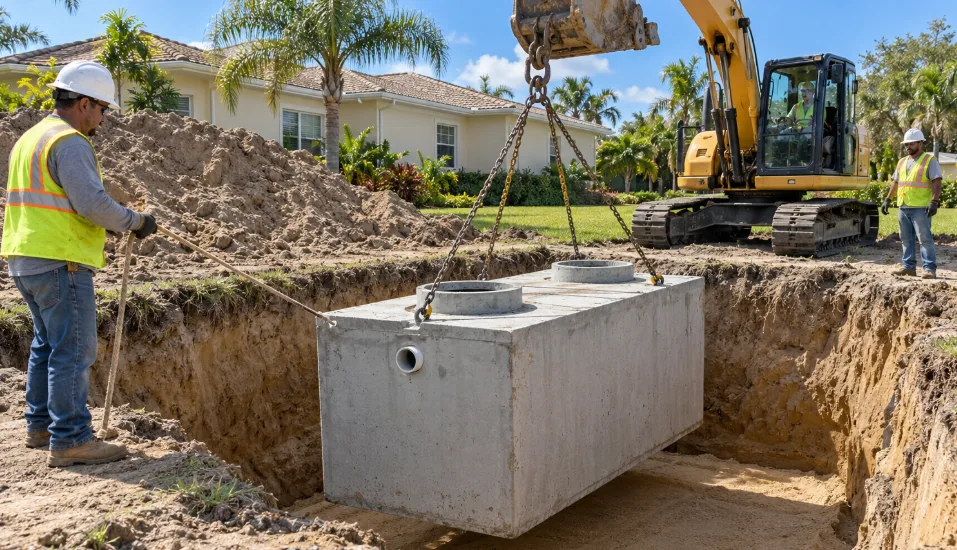
Drain field inspections, repairs and replacement for residential and commercial properties. We review distribution, soil, groundwater and wastewater demand before recommending work.
Repair starts with the distribution system and the soil receiving the wastewater. A damaged pipe, blocked distribution box and saturated field need different responses. Orlando rainfall and seasonal groundwater belong in the assessment before choosing excavation, aeration or replacement.
Explore Drain Field ServiceA field inspection reviews signs of poor absorption, accessible distribution parts, records and site changes. In Orlando, storm timing and seasonal water levels help explain repeat backups. We define what can be inspected and what additional testing may be needed.
Explore Drain Field ServiceReplacement needs enough suitable receiving area, the right elevation and DOH-Orange approval. Orlando properties can face seasonal groundwater, nearby wells or lakes, and yard changes that limit options. Review the whole layout and sewer availability before selecting a new field.
Explore Drain Field ServiceOrange County, August 2026
1,201-2,250 sq. ft.; minimum effective storage
Orlando International Airport, 1991-2020
A three-bedroom, two-bath home around 1,750 square feet is a useful planning example. Florida's matched design example gives 300 gallons per day of sewage flow and 900 gallons of minimum effective tank storage. The county listing median is not an all-home average or a septic-only measurement.
A larger floor plan can require more tank capacity even with the same bedroom count. Check the approved record, proposed use and site evaluation before choosing equipment. Groundwater, available land and sewer availability matter as well as house size.
Start a new system or replacement with Orange County permitting and inspection requirements. The county's next-business-day inspection-request response is separate from permit approval.
Overdue pumping lets sludge and floating waste build up. Escaped solids can clog the field.
Running toilets, leaks and back-to-back laundry loads can overwhelm the system’s capacity.
Grease and wipes obstruct flow. Harsh chemicals can disrupt treatment and harm the system.
Saturated ground leaves too little space for wastewater to drain and receive soil treatment.
Roots can enter openings. Vehicles crush components or compact soil. Broken fittings also disrupt flow.
Deteriorated or undersized systems struggle. On advanced systems, missed pump and aerator care can interrupt treatment.
A septic system is more than a tank. Its storage capacity, treatment process and drain field each do a different job. Use this guide to understand home size, tank materials, expected lifespan and Orlando conditions before choosing a service.
Orange County's listed homes had a median size of 1,751 square feet in August 2026, according to Realtor.com data published by FRED. This county listing snapshot is a useful roughly 1,750-square-foot reference, not the average of all Orlando homes or a measurement of septic-served properties.
A three-bedroom, two-bath home near that size is an illustrative planning example. Florida considers bedrooms and building area; bathroom count alone does not choose a tank. Before adding living space or converting a room, compare the proposed use with the county's septic record.
Florida's residential tables calculate design sewage flow and then minimum effective tank storage. These examples help frame the discussion; the approved property design determines the installation. Existing tanks can exceed the minima or have been permitted under older standards.
| Bedrooms and building area | Design flow | Minimum effective tank storage |
|---|---|---|
| 2 bedrooms, 751-1,200 sq. ft. | 200 gallons/day | 900 gallons |
| 3 bedrooms, 1,201-2,250 sq. ft. | 300 gallons/day | 900 gallons |
| 4 bedrooms, 2,251-3,300 sq. ft. | 400 gallons/day | 1,050 gallons |
| Design flow of 401-500 gallons/day | 401-500 gallons/day | 1,200 gallons |
When the bedroom and building-area rows differ, the criterion producing greater sewage flow controls. A two-bedroom home around 1,750 square feet can reach the 300-gallon-per-day area category; a three-bedroom 2,600-square-foot home can reach 400 gallons per day. Do not choose from bedroom count alone.
Tank gallons are storage. Gallons per day are design flow. Field area is a separate calculation based on the receiving soil and layout. Commercial or shared systems need their own review.
A heavy, rigid shell requiring lifting access and proper support. Inspect lids, seams and walls; weight does not eliminate groundwater concerns when emptied.
A lighter shell with model-specific support and backfill requirements. Check connections and follow the approved groundwater provisions.
A molded tank with burial and installation limits. Correct bedding, fittings and backfill matter. Select an approved product suited to the site.
The tank, field, pump and treatment equipment age differently. Maintenance, installation quality, wastewater loading and site conditions shape performance. Assess condition rather than replacing every component on the same calendar.
A conventional tank separates solids before wastewater reaches a suitable soil absorption area. Pumps and raised fields address distribution or elevation needs; advanced treatment adds processing. Tank material and treatment technology are different choices.
Review the soil profile, seasonal high groundwater, available land and setbacks. Sandy surface soil alone does not establish suitability. Paving, vehicle traffic and roof runoff can also affect a field.
Check DEP mapping and sewer availability for the exact parcel. New systems on lots of one acre or less in impacted BMAP or alternative restoration areas can require nitrogen-reducing treatment. Springs requirements may also apply. A complete replacement can be classified differently from a tank-only repair or field alteration.
DOH-Orange, the Florida Department of Health in Orange County, handles local septic permitting and inspections under DEP's reviewed transition guidance. City/county building and utility approvals are separate. Confirm the property's jurisdiction rather than relying on its postal city.
Provide the DEP4015 application, site plan, building floor plan, qualified site evaluation and fees. Additional design details depend on the proposed use. Include existing records for a repair or modification.
DEP application guidance and current forms.
Allow 4–6 business days for permit processing as an initial planning estimate after a complete application is submitted. Missing documents, permitting-office workload, site evaluations, engineering or additional approvals can extend the timeframe. Confirm the current schedule with the permitting office before setting an installation date.
Section 120.60 generally provides 30 days to identify deficiencies and 90 days after a complete application for a decision, unless a shorter law applies. These are administrative review limits, not a typical installation schedule.
Rule 62-6.015 calls for every effort to issue a repair permit within two working days after receiving the application. This effort target does not guarantee approval or reserve an installation date.
Orange County says requests received before 4 p.m. will be responded to within the next business day. After-hours requests count as received the next day. This is a response timeframe, not permit approval or a guaranteed inspection appointment.
Obtain required approvals before regulated work, coordinate inspection stages before covering components, and keep final approval. Weather, access and contractor scheduling are separate from agency review.
Orange County septic program · Inspection request timing · Section 120.60 · Repair rule.
The City of Orlando, Orange County Utilities or another utility may serve the address. Confirm actual sewer availability and connection requirements before paying for a replacement design. City utility maps show approximate locations and require field verification. A sewer line on the street does not establish the work or cost for one lot.
City of Orlando utility information.
Orange County identifies aerobic, performance-based and commercial systems among the categories requiring operating permits. Ask about ongoing maintenance and operating responsibilities when comparing designs.
Orlando International Airport's 1991-2020 normals show 51.45 inches of annual precipitation. June averages 8.05 inches, July 7.46, August 7.69 and September 6.37: 29.57 inches across those months. These are climate normals, not a forecast.
Normal daytime highs are 90.8°F in June, 92.0°F in July and 91.6°F in August. Heat alone does not diagnose failure; repeated rain, household flow and groundwater can reduce what a field accepts.
Describe whether backups follow storms, guests, laundry days or a pump alarm. Compare a wet patch with the mapped field location and recent weather. Check outlet restrictions and damaged components as well as soil saturation.
Reduce water use and keep people away from surfacing sewage. Have pumping conditions assessed first: an emptied tank can shift under groundwater pressure. Pumping does not dry the soil around the field.
Florida's tables use bedrooms and building area, with the more demanding criterion controlling. A matched three-bedroom home of 1,201–2,250 square feet has a 300-gallon-per-day design flow and 900-gallon minimum effective tank capacity. A matched four-bedroom home of 2,251–3,300 square feet has 400 gallons per day and 1,050 gallons of storage. Existing tanks may be larger.
The Realtor.com series published through FRED reports a 1,751-square-foot median for listed homes in the Orlando–Winter Haven metro in August 2026. That is a listing-market benchmark, not an average of all homes or a measurement of septic-served houses.
The Florida Department of Health in Orange County remains the local septic permitting contact under DEP's reviewed county transition list. City or county building approvals and utility sewer decisions are separate.
Prepare DEP4015 application and site plan, the building floor plan, a qualified site evaluation and applicable fees. The property and proposed system must meet the required design, setbacks, groundwater separation and any address-specific treatment conditions.
Allow 4–6 business days for permit processing as an initial planning estimate after a complete application is submitted. Missing documents, permitting-office workload, site evaluations, engineering or additional approvals can extend the timeframe. Confirm the current schedule with the permitting office before setting an installation date. Florida's repair rule has a two-working-day effort target, while section 120.60 generally provides a 30-day deficiency review and a 90-day complete-application decision framework. Inspection requests received before 4 p.m. are responded to within the next business day; that response is not permit approval.
A qualified evaluator reviews soil, seasonal high groundwater, topography and the area available for the system. The county uses that information with the house plans to determine the construction requirements.
Orlando's June–September normal rainfall totals 29.57 inches. Wet soil and higher groundwater can reduce the field's ability to receive wastewater. Check filters, pumps and plumbing too; weather alone does not establish the cause.
Have the conditions assessed first. Groundwater can lift an emptied tank, and pumping does not dry the surrounding soil.
Many household tanks need pumping every three to five years, adjusted to occupancy, capacity and measured solids. Advanced treatment and dosing equipment have additional maintenance requirements.
No. Check the parcel, sewer availability and project classification. New systems on lots of one acre or less in impacted BMAP or alternative restoration areas can require ENR treatment. Springs requirements may also apply. A tank-only repair and a complete replacement are different scopes.